
Photo for illustration purposes only
A third place is a space that is neither home (the first place) nor work or school (the second place), where you can relax without obligation or pressure.
The first time I heard the term, it sounded abstract, but it clicked the moment I thought about the specific cafes I actually return to without needing a reason. A third place isn't just "a cafe I like." It's closer to a category of space with its own, fairly specific, requirements.
What Is a Third Place, Exactly?
The concept comes from sociologist Ray Oldenburg, who used it to describe informal public gathering spaces distinct from the two places that structure most people's daily routine: home and work (or school). A third place is somewhere you can show up without a task to complete, talk to people or not, and stay without being rushed out.
Cafes, pubs, barbershops, and community parks are classic examples. What they share isn't the type of business, it's the social function: low cost or no cost of entry, conversation as the main activity (or the option of it), and regulars who treat the space as their own without owning it.
What Makes Somewhere a Real Third Place
A few conditions tend to separate an actual third place from a cafe that's merely pleasant:
- No pressure to perform a task. You don't need to be working, studying, or accomplishing anything to justify being there.
- Flexible, unstructured time. There's no clock pushing you out after a set period.
- A level playing field. Status outside the space (job title, income) doesn't change how you're treated inside it.
- Regulars and familiarity. Over time, a third place builds its own small community of people who show up often enough to recognize each other.
Why Third Places Matter
Oldenburg's original argument was that modern life, especially car-dependent suburban life, had quietly eliminated a lot of third places, leaving people with only home and work, and that this had a real cost: fewer informal social connections, more isolation, less of the low-stakes conversation that builds community. Tokyo's dense cafe culture, where a reasonably priced cup of coffee buys you an unlimited amount of time at a table, makes informal third places easier to find here than in a lot of cities.
Finding a Third Place at Green Beans Coffee
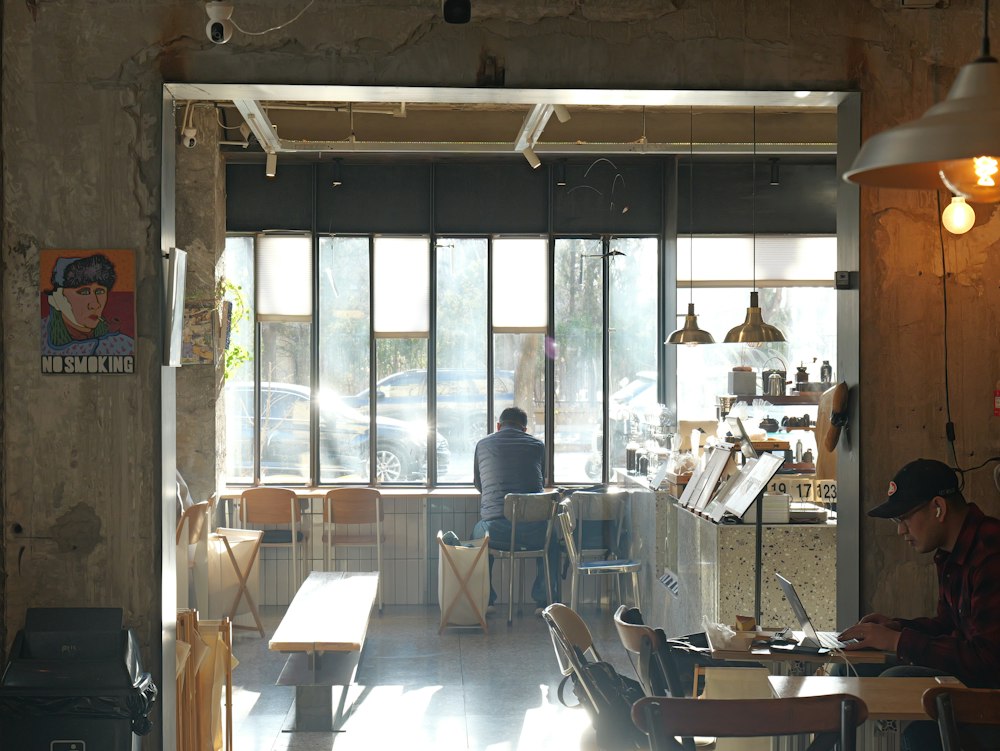
Green Beans Coffee in Kitasando, Shibuya, functions as a third place in a fairly literal sense. The room is quiet, the music stays low, and staying for an hour or more with a laptop, a book, or just a coffee doesn't draw any attention. Every table has Wi-Fi and a power outlet, but the space doesn't feel like it's built for productivity; it feels like it's built for staying a while, which is the actual point of a third place. I've written more about what a longer visit looks like in practice in a piece on hand-drip coffee and the pace of the shop, and the surrounding Kitasando neighborhood has the same unhurried character if you want to extend the idea into a walk.
Who This Is For
Anyone who wants a place to be, rather than a place to accomplish something: remote workers between meetings, readers, people meeting a friend with nowhere particular to be afterward, or travelers who want a quiet stop that isn't a tourist attraction.
Frequently Asked Questions
Q. Who coined the term "third place"?
Sociologist Ray Oldenburg introduced the concept to describe informal public gathering spaces separate from home (the first place) and work (the second place).
Q. What's an example of a third place?
Cafes, pubs, barbershops, bookstores with seating, and community parks are classic examples, as long as they allow unstructured time without a requirement to spend money quickly or leave.
Q. Is a coffee shop automatically a third place?
Not automatically. A coffee shop becomes a third place when it tolerates long, unhurried stays and builds a sense of regulars, rather than functioning purely as a quick transaction.
Q. Why are third places considered important?
They provide low-stakes social contact and a sense of community outside the pressures of home and work, which researchers have linked to reduced isolation and stronger informal social ties.
Q. Is Green Beans Coffee in Kitasando a good third place?
Yes. The quiet atmosphere, Wi-Fi and power at every table, and a culture of not rushing customers out make it function as a third place for many regulars.
Q. Can a third place change over time?
Yes. A space can function as a third place for some people and not others, depending on how welcome and unhurried it feels to that particular person.
Conclusion
A third place isn't about finding "a nice cafe"; it's about finding somewhere that asks nothing of you beyond showing up. Green Beans Coffee in Kitasando is one example worth trying in Tokyo, and the quiet, low-rise streets around it in Dagayasando make it easy to turn one visit into a longer, slower afternoon. If you're specifically after a quiet spot for solo work, that's covered in more detail separately, and how to find a quiet cafe in Tokyo for different occasions walks through matching a space to whatever you're actually there to do.
Related Articles

GREEN BEANS COFFEE
Visit the Cafe With No Sign,
in Kitasando
From a single cup of coffee to a truly memorable moment—
enjoy your time just as you please,
amidst homemade dishes and a tranquil atmosphere.
3 min walk from Kitasando Station
You can also reserve via Instagram DM(@green.beanscoffee)